

Common Causes of Knee Pain and How a Knee Joint Pain Relief Brace Can Help
Knee pain affects people of every age, from active athletes to office workers who sit for long hours. The knee carries most of your body weight and absorbs constant pressure during walking, climbing, bending, and standing. Over time, this stress wears down cartilage, weakens surrounding muscles, and triggers inflammation. Many people search for quick fixes, but understanding the actual cause of the pain makes recovery faster and more effective. This is where Arthagone™ steps in, offering solutions designed to support the knee joint through movement, rest, and recovery.
Unlike most braces on the market that rely on compression alone, Arthagone™ is built on a different technology one you won’t find in a generic pain relief belt or brace.
Key Takeaways
- Knee pain often stems from arthritis, ligament injuries, overuse, or poor posture.
- Early diagnosis prevents minor knee issues from becoming chronic conditions.
- A knee joint pain relief brace stabilizes the joint and reduces pressure during movement.
- Choosing the right brace depends on your activity level and the type of pain you experience.
- Combining a brace with proper exercise, rest, and posture correction speeds up recovery.
- Arthagone™ braces are infused with a scientifically developed, non-invasive, antibiotic-free active formula that supports relief from within the joint not just external compression, which is what sets it apart from a typical generic brace.
A Knee Joint Pain Relief Brace works by compressing and stabilizing the knee, which reduces strain on the ligaments and cartilage. When you walk, run, or climb stairs, the brace redistributes pressure away from damaged areas and keeps the joint aligned. This lowers swelling, improves blood circulation, and allows you to stay active without aggravating the injury further. People recovering from surgery, dealing with arthritis, or managing sports injuries often rely on this type of support to move comfortably throughout the day.
Common Causes of Knee Pain
Knee pain rarely appears without a reason. Identifying the source helps you choose the right treatment and support method.
- Osteoarthritis: Cartilage breaks down gradually with age, causing bones to rub against each other. This leads to stiffness, swelling, and a grinding sensation during movement.
- Ligament Injuries: Sudden twists or impacts during sports can tear the ACL, MCL, or other ligaments. These injuries cause sharp pain, instability, and difficulty bearing weight.
- Meniscus Tears: The meniscus cushions the knee joint. Tears often occur during pivoting movements and result in locking, swelling, or a popping sensation.
- Overuse and Repetitive Strain: Runners, cyclists, and manual laborers frequently develop tendonitis or bursitis from repeated stress on the joint.
- Poor Posture and Muscle Imbalance: Weak thigh or hip muscles shift extra pressure onto the knee, gradually leading to chronic discomfort.
- Obesity: Extra body weight increases the load on knee joints with every step, accelerating cartilage wear.
- Previous Injuries: Old fractures or sprains that healed improperly often resurface as pain years later, especially during physical activity.
Understanding these knee pain causes allows you to address the root issue rather than just masking the symptoms.
How to Relieve Knee Pain
Managing knee pain effectively requires a combination of rest, movement, and support. Here are practical steps that make a real difference:
- Rest the joint during flare-ups to prevent further irritation.
- Apply ice or heat to reduce swelling and relax tight muscles.
- Strengthen surrounding muscles through low-impact exercises like swimming or cycling.
- Maintain a healthy weight to reduce pressure on the joint.
- Stretch regularly to improve flexibility and reduce stiffness.
- Wear a supportive brace during activity to stabilize the knee and prevent further strain.
These methods work best when combined rather than used in isolation. A brace, in particular, provides immediate support while your body heals in the background. With Arthagone™, that support goes a step further — the active formula built into the brace is designed to work alongside rest and movement, not just hold the joint in place.
How a Knee Joint Pain Relief Brace Works
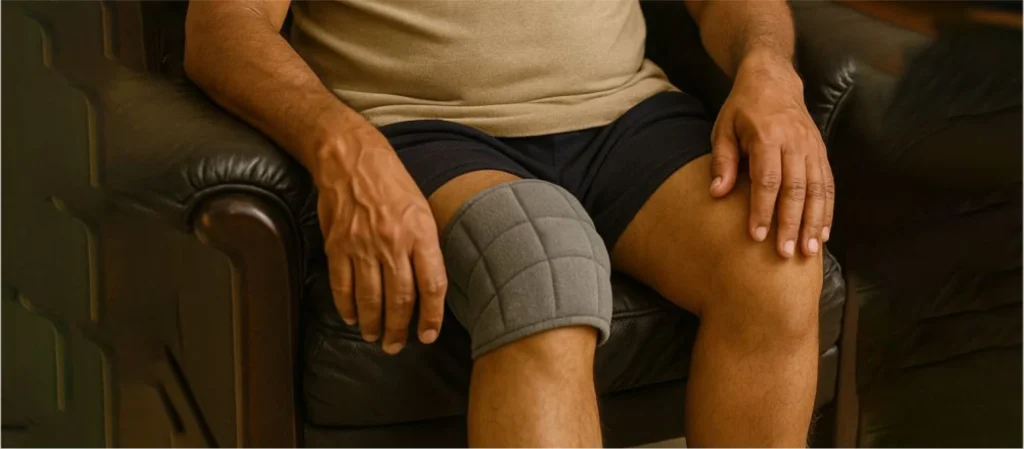
A knee joint pain relief brace applies targeted compression around the joint, which limits excessive movement and keeps the kneecap aligned. This reduces friction between bones and cartilage, easing pain during walking, standing, or exercising. The compression also boosts blood flow, which speeds up healing and reduces swelling after activity.
Braces come with adjustable straps and breathable materials that fit snugly without restricting circulation. Many designs include side stabilizers that prevent lateral movement, which is especially useful for people recovering from ligament injuries or managing arthritis. Wearing the brace during physical activity distributes weight more evenly across the joint, protecting damaged areas from additional stress.
Generic braces stop here mechanical support only. Arthagone™ adds a layer most brands don’t offer:
- Scientifically developed formula: Arthagone™ braces are infused with a non-invasive, non-toxic, non-hazardous, biodegradable, antibiotic-free active powder that delivers relief from within, alongside the external compression.
- Boosts natural blood circulation: Improved micro-circulation around the knee is designed to support the body’s own repair process.
- Fluid absorption: The formula helps absorb excess fluid from the affected joint, which may reduce swelling and improve comfort.
This combination of external stabilization and internal support is what makes Arthagone™ different from a generic pain relief brace.
Choosing the Best Knee Pain Relief Brace
Selecting the best knee pain relief brace depends on your specific condition and activity level.
- For arthritis: Choose a brace with strong compression and warmth retention to ease stiffness.
- For ligament injuries: Look for a knee injury support brace with hinged side supports for maximum stability.
- For everyday use: A lightweight, breathable brace works well for mild discomfort or preventive support.
- For athletes: Choose a flexible joint pain relief brace that allows a full range of motion while still offering protection.
Fit matters as much as function. A brace that’s too tight restricts circulation, while one that’s too loose fails to provide adequate support. Measuring your knee circumference before purchasing helps you find the right size.
Extending Support Beyond the Knee
Knee pain often connects to posture and lower back alignment, which is why many people also benefit from additional support around the lumbar region.
Benefits of a lumbar support belt include reduced strain on the lower back, improved posture during long hours of sitting or standing, and better spinal alignment, which indirectly reduces pressure transferred down to the knees and hips.
How to use a lumbar support belt is straightforward: position it around your lower back, adjust the straps for a snug but comfortable fit, and wear it during activities that involve lifting, prolonged standing, or repetitive bending.
When should you wear a lumbar support belt? It’s most useful during physical labor, long commutes, workouts involving heavy lifting, or recovery periods after a back injury. Wearing it consistently during these activities helps maintain proper posture and prevents compensatory strain that can affect your knees over time.
If knee pain has been limiting your daily activities, taking a closer look at supportive options designed for your specific condition can make everyday movement noticeably easier. Many people find that pairing the right brace with simple lifestyle adjustments brings faster, more comfortable results than relying on rest alone.
Arthagone™ designs its braces with adjustable compression, breathable fabric, targeted stabilization, and its signature scientifically developed active formula to fit different stages of knee recovery and daily wear a combination of technology you won’t find in a generic pain relief brace.
Frequently Asked Questions
1. Can a knee joint pain relief brace be worn all day?
Most braces are designed for extended wear, but it’s best to remove them periodically to allow circulation and prevent skin irritation. With Arthagone™, 4–5 hours of wear is generally enough for the active formula to support the relief process before resting.
2. Does wearing a knee brace weaken the muscles over time?
No, when used correctly alongside strengthening exercises, a brace supports the joint without replacing natural muscle function.
3. How do I know if my knee pain requires medical attention?
Persistent swelling, instability, or pain that doesn’t improve within a few weeks should be evaluated by a healthcare professional.
4. Can a knee brace be used for arthritis and injury recovery at the same time?
Yes, many braces offer adjustable compression levels suitable for both chronic conditions and post-injury recovery.
5. Is a lumbar support belt necessary if my pain is only in the knee?
Not always, but since posture affects joint alignment throughout the body, a lumbar belt can offer indirect relief by correcting the way weight is distributed while standing or lifting.
6. What makes Arthagone™ different from a generic knee brace?
Most knee braces work through compression and stabilization alone. Arthagone™ braces add a scientifically developed, non-invasive, non-toxic, antibiotic-free active formula designed to support natural relief, circulation, and fluid absorption from within the joint a technology not found in typical strap-and-buckle braces.