8 Signs You May Need a Knee Pain Relief Belt
Knee discomfort rarely announces itself all at once. It creeps in during a morning walk, lingers after a workout, or flares up when you climb stairs. Many people push through this discomfort for months before realizing that a simple support tool could ease their daily movement. Arthagone® designs knee support solutions that help people regain confidence in their steps without relying entirely on medication or invasive treatment. Understanding when your body is signaling for extra support can save you from long-term joint strain and help you move through your day with far less discomfort.
Key Takeaways
- Persistent swelling, stiffness, or instability are early indicators that your knee needs external support.
- A knee pain relief belt stabilizes the joint, reduces pressure, and improves mobility during daily activities.
- Choosing the right knee support brace depends on your activity level, pain intensity, and the underlying cause of discomfort.
- Wearing a knee brace for pain relief can prevent further joint damage and support faster recovery.
- Consulting a healthcare provider alongside using a knee support belt ensures you address the root cause of your pain.
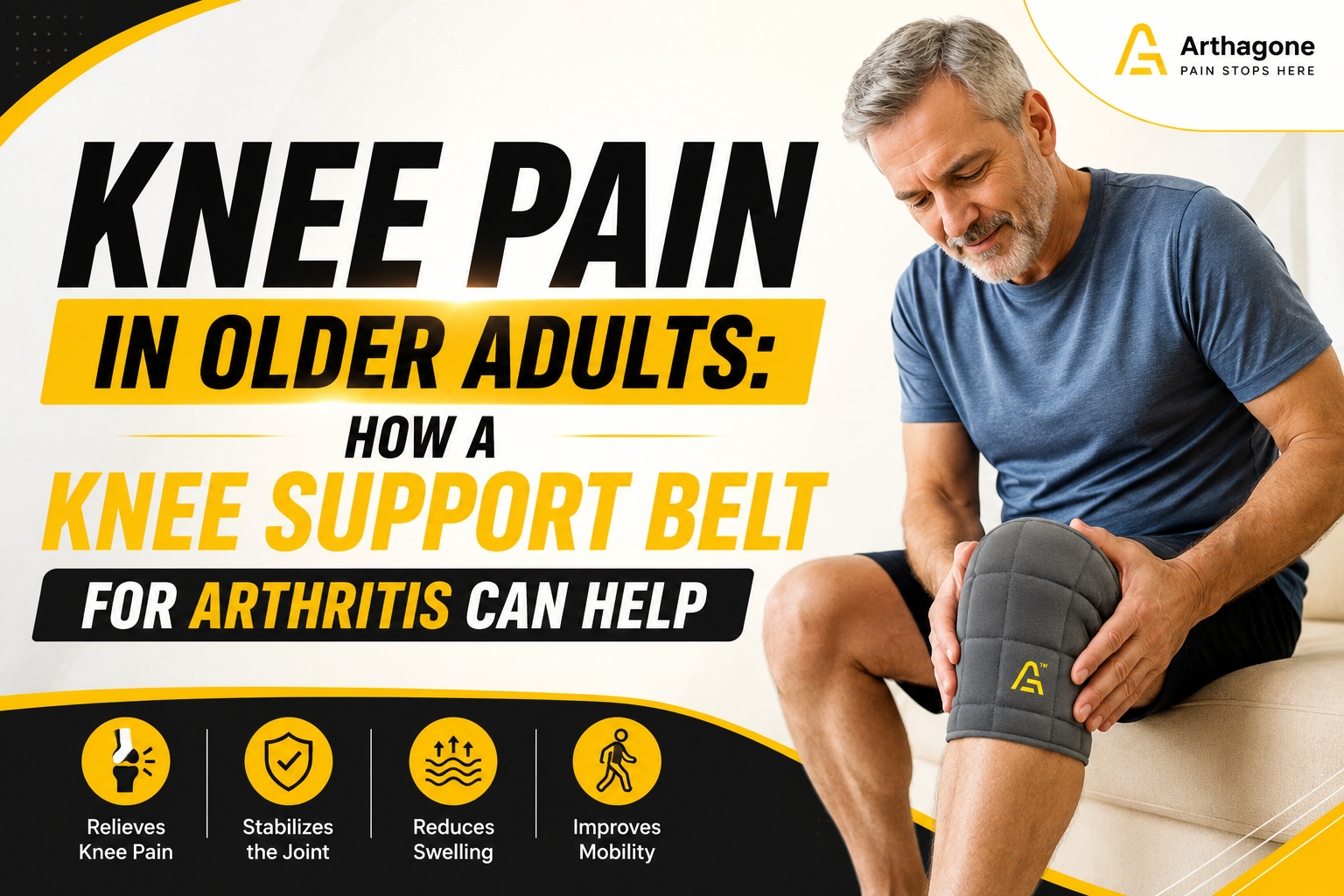
A knee pain relief belt offers targeted compression and stability to joints that are overworked, injured, or weakened by age. It wraps around the knee to distribute pressure evenly, reduce strain on tendons and ligaments, and limit unnecessary movement that could worsen an existing injury. Many people turn to this type of support after noticing recurring discomfort during simple activities like walking, standing, or climbing stairs. Recognizing the signs early allows you to address joint stress before it develops into a chronic condition that limits your mobility and independence.
1. You Feel Pain After Standing for Long Periods
Standing for extended periods places continuous pressure on your knee joints, especially if you work in retail, healthcare, or manufacturing. If you notice throbbing or aching by the end of your shift, your knees may be struggling to absorb that repeated stress. A knee support belt redistributes weight across the joint and reduces the load placed directly on your kneecap. This support helps you stay on your feet longer without the nagging discomfort that builds up throughout the day.
2. Your Knee Feels Unstable or Gives Way
A sensation of your knee buckling or feeling weak during movement is a serious warning sign. This instability often stems from ligament laxity, muscle weakness, or previous injury that hasn’t fully healed. Ignoring this symptom increases your risk of falling or causing further damage to the joint. A knee brace for pain relief adds external stability, holding the joint in proper alignment and reducing the chance of sudden buckling during everyday movement.
3. You Experience Swelling After Physical Activity
Swelling around the knee after exercise, walking, or even light household chores points to inflammation within the joint. This reaction usually indicates that your knee is being overworked or that there’s an underlying issue such as cartilage wear or tendon irritation. Compression from a knee pain relief belt helps control swelling by improving circulation and limiting excess fluid buildup around the joint, allowing your body to recover more efficiently between activities.

4. You Struggle With Stairs or Inclines
Climbing stairs or walking uphill requires significant knee flexion and places extra demand on the surrounding muscles and tendons. If you find yourself avoiding stairs, holding onto railings, or feeling sharp discomfort with each step, your knee joint likely needs additional support. A knee support brace stabilizes the patella and reduces strain during these movements, making inclines and stairs far more manageable throughout your day.
5. You Notice Stiffness in the Morning
Morning stiffness that eases as the day goes on is a common sign of joint degeneration or early arthritis. This stiffness happens because synovial fluid, which lubricates the joint, thickens overnight and takes time to circulate properly once you start moving. Wearing a knee support belt during your morning routine can gently encourage blood flow and reduce the time it takes for stiffness to subside, helping you move more comfortably from the moment you wake up.
6. You Have a History of Knee Injury
Previous injuries such as ligament tears, meniscus damage, or fractures leave the knee more vulnerable to future problems, even after treatment. Scar tissue and altered joint mechanics can make the area weaker than it was before the injury. If you’ve had any past knee trauma, using a knee brace for pain relief during physical activity provides an added layer of protection, reducing the risk of re-injury and supporting the joint’s long-term function.
7. Your Pain Increases During Exercise or Sports
Athletes and fitness enthusiasts often notice knee pain intensifying during specific movements like squatting, jumping, or running. This pain typically results from repetitive stress on tendons, cartilage, or the patellar area. A knee pain relief belt worn during workouts helps absorb shock and stabilizes the joint through high-impact movement, allowing you to maintain your fitness routine while minimizing further wear on the knee structure.
8. You Feel Discomfort That Disrupts Sleep or Daily Tasks
When knee pain starts interfering with sleep, sitting comfortably, or completing basic tasks like getting in and out of a car, it has moved beyond a minor annoyance. This level of disruption suggests the joint needs consistent support throughout the day, not just during exercise or activity. Wearing a knee support brace regularly helps manage pain levels, allowing you to complete daily responsibilities without constant discomfort holding you back.
How to Choose a Knee Pain Relief Belt
Selecting the right support depends on several factors unique to your situation. Consider these points before making a decision:
- Identify your primary concern: Instability calls for a brace with rigid side supports, while general soreness may only require light compression.
- Check the sizing carefully: A belt that’s too loose won’t provide adequate support, while one that’s too tight can restrict circulation.
- Look at the material: Breathable, moisture-wicking fabric keeps the area comfortable during extended wear, especially during exercise.
- Consider your activity level: Athletes often need adjustable straps for a secure fit during dynamic movement, while those managing daily discomfort may prioritize comfort for all-day wear.
- Review adjustability features: Straps and closures that let you customize compression levels help address changing pain levels throughout the day.
Taking time to evaluate these factors ensures you select a knee support belt that matches your specific needs rather than a generic solution that may not address your particular discomfort.
If you’ve recognized several of these signs in your own daily routine, it may be time to explore options that offer real support for your joints. Many people find that adding the right kind of stability to their knee makes a noticeable difference in how they move, work, and stay active throughout the week. Taking a proactive step now, rather than waiting for the discomfort to worsen, can make daily movement feel significantly easier. Arthagone® offers a range of knee support solutions designed to fit different activity levels and comfort needs, making it easier to find the right match for your lifestyle.
Frequently Asked Questions
1. How long can I wear a knee pain relief belt each day?
Most people can wear a knee support belt for several hours at a time, but it’s best to remove it periodically to allow circulation to normalize. Extended wear beyond a full day should be discussed with a healthcare provider, especially if you notice numbness or discoloration.
2. Can a knee support brace be worn during sleep?
Generally, knee braces are designed for use during waking activity rather than sleep, since restricted movement overnight can affect circulation. If nighttime discomfort is a concern, ask a healthcare provider about specialized nighttime support options.
3. Does a knee brace for pain relief help with arthritis?
Yes, many people with arthritis use knee braces to reduce joint stress, improve stability, and manage pain during movement. The compression and support help offset some of the mechanical strain that arthritis places on the joint.
4. How do I know which size knee support belt to buy?
Most brands provide a sizing chart based on measurements taken around the knee and a few inches above and below the joint. Measuring accurately before purchasing helps ensure the belt provides proper compression without restricting movement.
5. Can I exercise while wearing a knee pain relief belt?
Yes, many knee belts are specifically designed for use during physical activity, offering additional stability during movements like running, squatting, or lifting. Choosing a belt with adjustable straps allows you to customize the fit based on the intensity of your activity.