

How Does a Back Support Belt Help During Heavy Lifting?
Heavy lifting puts enormous stress on the spine, the lower back muscles, and the surrounding joints. Whether you’re loading boxes at a warehouse, moving furniture, or working out at the gym, one wrong movement can lead to a strain that keeps you off your feet for weeks. This is exactly where a Back Support Belt for Heavy Lifting earns its place in your daily gear. Brands like Arthagone™ design these belts to stabilize the core, protect the lumbar region, and give lifters the confidence to move heavier loads safely.
Key Takeaways
- A back support belt for heavy lifting stabilizes the spine and reduces pressure on the lower back during strenuous movement.
- It increases intra-abdominal pressure, which supports the core and protects the vertebrae from sudden shifts.
- A properly fitted lifting belt for back support lowers the risk of strains, herniated discs, and muscle fatigue.
- Choosing the right back brace for heavy lifting depends on material, width, and closure type.
- Wearing a lower back support belt correctly matters as much as owning one.
Using a Back Support Belt for Heavy Lifting isn’t just about comfort — it changes how your body distributes force while you bend, pull, or push weight. It works with your muscles rather than replacing them, giving your spine an external frame of support exactly when it needs it most.
What Happens to Your Back During Heavy Lifting
When you lift something heavy, your spine compresses and your core muscles contract to keep your torso upright. If your form breaks down even slightly, the load shifts onto the lumbar spine instead of your legs and hips. Over time, this repeated stress wears down spinal discs and stretches the muscles that hold your posture in place. A back support belt for heavy lifting counters this by wrapping firmly around the abdomen and lower back, reminding your body to maintain a neutral spine position throughout the lift.
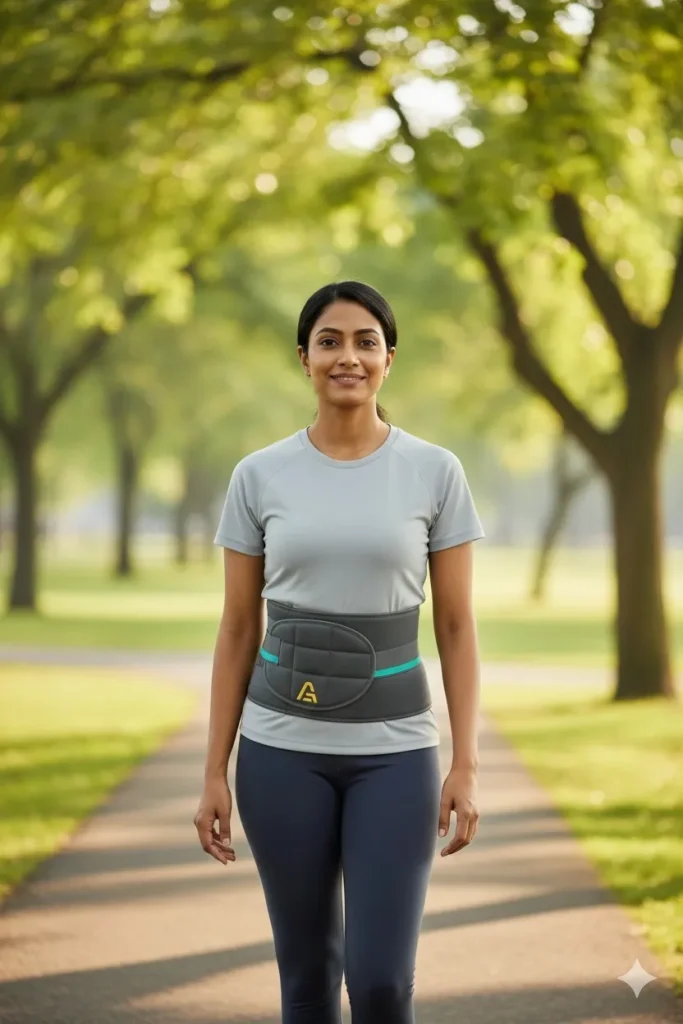
How a Back Support Belt Protects Your Spine
The core mechanism behind any lifting belt for back support is intra-abdominal pressure. When the belt compresses your midsection, it creates a firmer, more stable cylinder of pressure inside your torso. This pressure acts like an internal brace, taking some of the load off your spinal discs and transferring it to the belt and surrounding muscles. The result is less shear force on the vertebrae and a lower chance of sudden, awkward movements causing injury.
A back brace for heavy lifting also limits how far you can bend or twist. This restriction isn’t about immobilizing you — it’s about keeping your range of motion within a safer zone, especially during repetitive lifting tasks where fatigue tends to break good form.
Benefits of a Back Support Belt
The benefits of back support belt use go beyond injury prevention:
- Improved posture — the belt encourages an upright spine position while bending or squatting.
- Reduced muscle fatigue — external support means your lower back muscles work less to stabilize the spine.
- Better lifting confidence — knowing your back is supported helps you focus on technique instead of worrying about strain.
- Faster recovery for existing back issues — a lower back support belt can ease discomfort for people already managing mild back pain.
- Consistent performance — athletes and warehouse workers alike lift more consistently across long shifts when fatigue sets in slower.
Choosing Between a Back Brace and a Lower Back Support Belt
Not every belt serves the same purpose. A back brace for heavy lifting tends to be wider and more rigid, built for powerlifting or industrial settings where maximum stabilization matters. A lower back support belt, on the other hand, is often more flexible and designed for extended wear, suiting warehouse staff, delivery workers, or anyone who needs support throughout an entire shift rather than a single lift. Picking between the two comes down to how often you lift, how heavy the loads are, and whether you need mobility or maximum rigidity.
How to Wear a Back Support Belt Correctly
Knowing how to wear a back support belt changes how effective it actually is. Follow these steps:
- Position the belt so it sits around your natural waistline, covering the lower back and abdomen evenly.
- Tighten it enough to feel firm support without restricting your breathing.
- Take a breath before lifting to engage the intra-abdominal pressure the belt is designed to support.
- Bend at the knees, not the waist, keeping your back straight throughout the lift.
- Loosen the belt during rest periods so your muscles don’t become overly dependent on external support.
Wearing a belt incorrectly — too loose, too tight, or positioned too high — reduces its protective effect and can even create false confidence that leads to poor lifting form.
Who Should Use a Back Support Belt for Heavy Lifting
Warehouse staff, movers, gym-goers doing heavy compound lifts, construction workers, and anyone handling repetitive loads throughout the day can benefit from a Back Support Belt for Heavy Lifting. It’s particularly useful for people returning to physical work after a minor back injury, since it offers extra reassurance while muscles rebuild strength. That said, a belt works best alongside good lifting technique, not as a replacement for it.
If lifting is a regular part of your work or training routine, it’s worth looking into a support belt built specifically for the demands you face daily. Arthagone™ offers back support belts designed with adjustable compression, breathable materials, and ergonomic shaping so you get support that moves with your body instead of against it. Checking the fit, material, and closure style before buying can make the difference between a belt that just sits there and one that actually protects your back through every lift.
FAQs
1. Does a back support belt actually prevent back injuries?
It significantly lowers the risk by stabilizing the spine and reducing pressure on the lumbar region, though proper lifting technique still matters.
2. Can I wear a back support belt all day?
It’s best to wear it only during lifting tasks. Constant use can weaken your core muscles over time since they rely less on their own strength.
3. What’s the difference between a lifting belt and a back brace?
A lifting belt is typically flexible and made for repeated daily use, while a back brace is more rigid and built for heavier, less frequent lifts.
4. How tight should a back support belt be?
Tight enough to feel firm pressure around your midsection without restricting normal breathing or movement.
5. Is a back support belt suitable for people with existing back pain?
Many people with mild lower back discomfort find relief using one, but it’s best to consult a doctor before regular use if pain is ongoing.