

How a Knee Pain Relief Belt Can Help Ease Everyday Knee Pain
Knee pain has a way of showing up in the middle of ordinary life. It makes the stairs feel longer, turns a short walk into a negotiation, and makes getting up from a low chair something you plan for. Because the knee carries your body weight with every step, even a small problem there gets noticed all day. Many people look for something simple that makes movement feel steadier, and a knee support belt is one of the most common choices. This article explains how a knee pain relief belt works, who it may help, what the research actually says, and how to use one sensibly.
Key Takeaways
- A knee pain relief belt gives gentle compression, warmth, and a sense of stability around the joint, which many people find makes daily movement feel easier.
- It suits people with mild to moderate everyday knee discomfort, stiffness, or a feeling of instability, not those with serious injuries that need a diagnosis first.
- Research on knee braces is mixed. Some studies show small benefits for pain and confidence in movement, while others show little difference.
- Fit, size, and adjustability matter more than extra features.
- A belt works best alongside strengthening exercises, weight management, and sensible activity pacing, and it does not replace medical care.
A knee pain relief belt works by wrapping the joint in even, comfortable pressure. That pressure can make the knee feel more secure, while the warmth it traps helps stiff tissues loosen up. For people who spend their days on their feet, climb stairs often, or are returning to activity after a rest, it offers a drug-free way to take some of the edge off discomfort. It is one tool among several, and it works best when you understand what it can and cannot do.
Understanding Everyday Knee Pain
Knee pain rarely has one cause. The joint is a hinge that handles bending, straightening, and a surprising amount of load, and it relies on cartilage, ligaments, tendons, and the muscles around it working together. When any of these are strained or worn, discomfort follows. Among the common causes of knee pain are overuse, muscle weakness around the hip and thigh, extra body weight, minor sprains, and gradual wear in the joint.
Age-related changes play a part too. Many adults develop some degree of knee osteoarthritis, where the cushioning cartilage thins over time, leading to stiffness and aching that often feels worse after rest or at the end of a long day. Younger and more active people are more likely to experience pain around the kneecap or strain from sudden increases in training.
Because the causes differ, the right response differs as well. A support belt can help with how the knee feels and moves, but it does not rebuild cartilage or repair a torn ligament.
How Does a Knee Pain Relief Belt Work?
A knee pain relief belt works through a mix of compression, warmth, gentle support, and movement feedback. Understanding each part helps you set realistic expectations.
Compression and Support
The belt applies even pressure around the joint. This snug feeling can reduce the sense of looseness or wobble that some people feel when they walk, climb, or stand up. It does not hold the knee in place like a rigid brace, but it gives the surrounding tissues something firm to work against.
Warmth for Stiff Joints
Most belts hold body heat close to the skin. This warmth can make a stiff knee feel looser, particularly in the morning or in cool weather. Warmth does not repair damage, but it can make movement more comfortable.
Better Body Awareness
Compression gives your brain extra information about where the knee is and how it is moving. This awareness, often called proprioception, may help some people feel more confident on uneven ground or stairs. It is one reason people often report that the knee simply feels steadier.
Gentle Limits on Movement
A belt can discourage sudden twisting or deep bending that makes a sore knee flare up. The level of restriction depends on the design, with flexible belts offering a reminder and firmer ones offering more resistance.
8 Signs You May Need a Knee Pain Relief Belt
Not every ache calls for a support belt, but these everyday patterns suggest one could be worth trying.
1. Pain on stairs. Going up or down steps makes the knee ache or feel strained.
2. Stiffness after sitting. The joint feels tight when you stand up after a long meeting, drive, or movie.
3. Morning stiffness. The knee takes a few minutes to loosen up when you start the day.
4. A wobbly feeling. The knee feels slightly unsteady on uneven ground or when changing direction, without actually giving way.
5. Aching after long walks or standing. Discomfort builds up after time on your feet.
6. Mild swelling after activity. The knee looks or feels a little puffy after a busy day, then settles with rest.
7. Pain when rising from a chair. Standing up from a low seat or the toilet sets off a twinge.
8. Hesitation to return to activity. You are recovering from a minor strain and want extra reassurance while you ease back into movement.
If the knee gives way, locks, or swells sharply, do not rely on a belt. Those signs call for a medical assessment.
Who Benefits Most From a Knee Support Belt
People With Mild Knee Osteoarthritis
Adults with early or mild joint wear often describe stiffness and aching that comes and goes. Compression and warmth can make daily tasks more comfortable, although the evidence for long-term benefit is limited.
Walkers, Runners, and Active Adults
People who increase their mileage or return to sport after a break may feel their knees need extra reassurance. A belt can provide that, as long as it is paired with gradual progression and strength work.
Desk Workers and Drivers
Long periods of sitting with bent knees can leave the joint stiff and achy. A belt worn when you start moving again may help the knee feel looser.
People on Their Feet All Day
Teachers, retail staff, nurses, and tradespeople spend hours standing and walking. A belt can reduce that end-of-shift ache for some of them.
Older Adults
Reduced muscle strength and balance confidence are common with age. The feedback a belt provides can make walking and stair use feel more secure, although it is no replacement for strength and balance training.
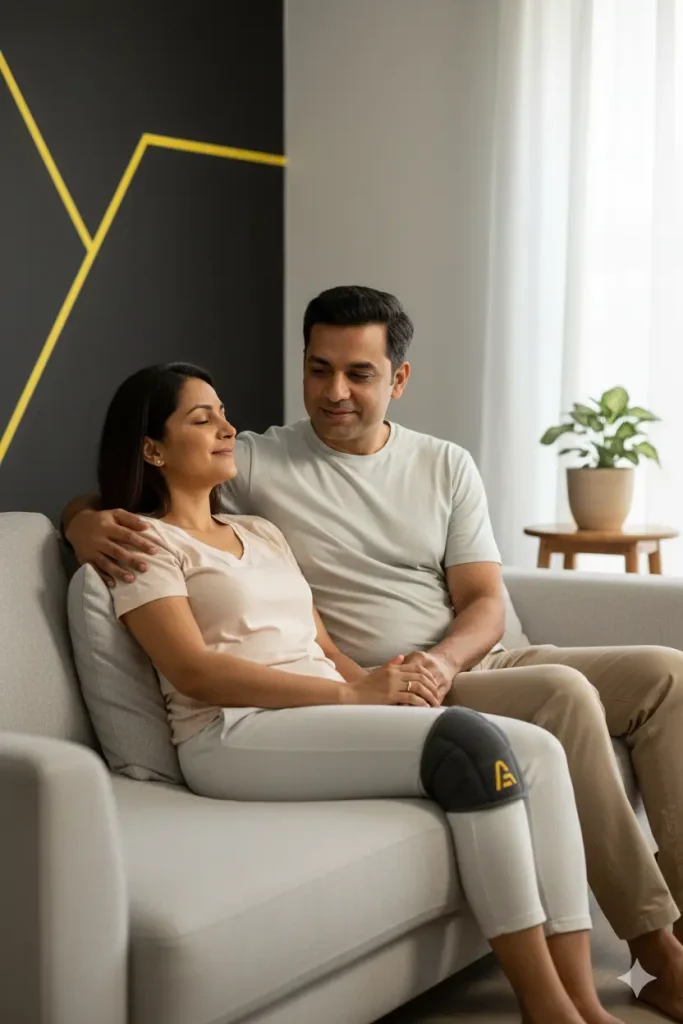
6 Things to Know Before Choosing a Knee Pain Relief Belt
1. Know what kind of support you need. Soft wraps and sleeves suit mild discomfort and stiffness. Belts with stabilizing features suit people who want more structure. Match the support to your symptoms rather than buying the firmest option.
2. Measure before you buy. Measure around the knee, or the point the sizing chart specifies, and compare it with the size guide. Too loose and it slips, too tight and it can cause discomfort or reduce circulation.
3. Look for adjustable compression. Adjustable straps let you loosen the belt for sitting and tighten it for walking. Needs change through the day, so flexibility helps.
4. Check the material. Breathable, skin-friendly fabric is better for longer wear, while thicker neoprene holds more heat. Think about the climate and how you plan to use it.
5. Choose a design that stays put. A belt that slides down the leg when you walk or bend is not helping. Look for non-slip edges and a shape that suits your leg.
6. Be honest about what it can do. A belt may make the knee feel better, but it will not fix the cause of pain. If your symptoms are persistent or unexplained, get them checked first.
How to Use a Knee Pain Relief Belt Correctly
Fit It While Seated
Sit with the knee slightly bent and the leg relaxed. Position the belt so it is centered over the joint, then fasten it evenly. It should feel snug and supportive, not tight.
Wear It During Trigger Activities
Put it on for walks, stairs, long periods of standing, or exercise. This targets the times when your knee tends to complain.
Avoid Wearing It All Day
Constant use may encourage the muscles around the knee to depend on external support. Take it off while resting or sleeping unless a clinician tells you otherwise.
Check Your Skin and Circulation
Remove the belt if you notice numbness, tingling, color change, or skin irritation. Clean it regularly according to its care instructions.
Pair It With Strength Work
Strong thigh and hip muscles take load off the knee. Knee strengthening exercises such as sit-to-stand repetitions, glute bridges, and straight-leg raises build the internal support that no belt can replace.
What the Research Says About Knee Braces
It is worth being clear about the evidence. A Cochrane review of braces and orthoses for knee osteoarthritis, along with later reviews, found that the quality of the evidence is low. Some trials reported less pain, better function, or greater confidence among people who used braces, while others found no meaningful difference compared with no brace or with other care.
What this suggests is that responses vary. Some people feel a clear benefit and others do not, and results seem to depend on the person, the condition, and the type of support. For that reason, a knee pain relief belt is best treated as a comfort and confidence aid to try alongside exercise and activity changes, not as a proven treatment.
Additional Strategies to Complement Belt Use
Build Muscle Around the Joint
Regular strengthening of the quadriceps, hamstrings, and hip muscles is one of the best-supported ways to ease knee pain over time.
Keep Moving With Low-Impact Activity
Walking, cycling, and swimming keep the joint mobile without heavy impact. Gentle movement is usually better for stiff knees than prolonged rest.
Manage Body Weight
Every extra kilogram adds load to the knees with each step. Even modest weight loss can reduce that burden.
Pace Your Activity
Increase walking, running, or training gradually. Sudden jumps in effort are a common trigger for knee pain when climbing stairs and during exercise.
Take Care of Night-Time Comfort
If your knees ache in bed, a pillow between the knees when side sleeping may help. If knee pain at night is persistent, mention it to a doctor.
When to Seek Professional Help
While an Arthagone® knee pain relief belt may help manage everyday discomfort, some symptoms need medical attention. See a healthcare professional if you have severe pain after an injury, a knee that locks or gives way, swelling that is significant or keeps returning, redness with warmth or fever, difficulty putting weight on the leg, visible deformity, or pain that persists at rest or at night. Swelling and tenderness in the calf also need prompt attention. A proper diagnosis ensures you receive the right treatment instead of masking a problem that needs more than a belt.
Frequently Asked Questions
How does a knee pain relief belt work?
It wraps the knee in gentle compression and warmth, which can make the joint feel more stable and less stiff. It also gives your body extra feedback about knee position and can discourage movements that aggravate pain.
Can I wear a knee support belt all day?
It is better not to. Constant wear may reduce how much work your own muscles do. Use it during activities that tend to trigger pain and take it off when resting.
Does a knee pain belt cure knee pain?
No. It can ease symptoms and make movement more comfortable, but it does not address underlying causes such as muscle weakness, joint wear, or injury. Exercise and lifestyle changes matter more over the long term.
How tight should a knee pain relief belt be?
Snug and supportive, but not painful. You should be able to bend the knee comfortably, and you should not feel numbness, tingling, or a pulsing sensation.